Wednesday, 7 January 2015

Task Eight - Referencing


Safe driving ads that shock

Terry Crews old spice commercial
https://www.youtube.com/watch?v=LCl5uyn5K7k

nespresso what else george clooney
https://www.youtube.com/watch?v=K63lLgJes3g

Paddy power blind football
http://www.youtube.com/watch?v=ispFw6THxtg

Infinity advert ban

specsavers train station advert
http://www.youtube.com/watch?v=0lTBMnVyyqY

Icelands food it's time we met

join the BARB panel
http://www.tvneedsyou.co.uk/

ITV advertisements
http://www.itvmedia.co.uk/

Advertise your own idea
http://www.channel4sales.com/advertising


·      AS Media Studies: The Essential Introduction Second Edfition. Philip Rayner, Peter wall and Stephen Kruger.” “Part 4: Three Case Studies. Case Study 2: advertising and marketing.” Routledge 2005.  ISBN 0-415-32966-3

·      “The Media Magazine. The English and Media Centre.” “Analysing Still-image adverts: Reading Lynx by Mark Ramey”. Issue 45 / September 2013. ISSN 1478-8616

·      The Media Students Book 4th Edition”, “Chapter 9 Advertising and Branding”: Gill Branston and Roy Stafford: Routledge 2007: ISBN 0-415-37143-0


·      Advertising | How to Advertise  on Channel 4 and its platforms”: http://www.channel4sales.com/advertising.

Friday, 19 December 2014

Task Seven - Sources of Information in Advertising

Client and agencies can gather information before they start producing a new advertising campaign through many different ways. 

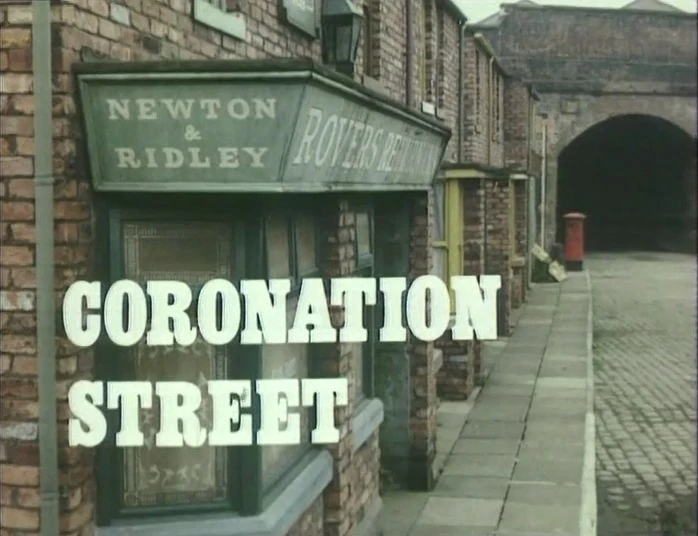
The first way is through Television ratings, an example of this is BARB, which is useful as it is objective. BARB is an acronym for Broadcasters' Audience Research Board, it was set up in 1981 to provide the industry standard television audience measurement service for broadcasters' and the advertising agency. BARB is owned by the ITV, BBC, Channel 4, Channel 5, British Sky Broadcasting, and the IPA (Institute of Practitioners in Advertising) and is a not for profit company limited by guarantee. Being able to get television ratings is helpful as producers and advertisers can see the popularity of certain shows and then decide, based on these ratings, where to put their advertisements.  Programme Profiles is a breakdown of who watches a programme, this is useful to the advertiser as they can target adverts to specific programmes, for example Downton Abbey may be a programme for women who are aged 50+. A Rate card is how much it costs to put an advert on, what the rates are. For example Coronation Street is much more expensive than a minority programme show at an unsocial hour.


Information on advertising can also be found on websites such as Channel 4 sales, which gives you a whole range of opportunities to put your advert on the TV and get people interested in a certain event or place etc. They offer a selection of resources and questions frequently asked by newcomers. The Grow LIVE gives young entrepreneurs the opportunity to go and find out about the benefits of TV advertising and what the money can be used on. There are also many TV series and programs that need sponsoring and the website gives you a list of many different ones you can choose from. Choosing a program to sponsor helps to your brand to be successful as it will be seen by a large quantity of the audience. 

Wednesday, 17 December 2014

Task Six - Audience Information

It is useful for advertisers to study audiences because they are a very important concept throughout media studies. Every time and advert is made there has been an audience in mind i.e. a group of people who will see it and make some sort of sense out of it. Generally the producers make some sort of money out of the targeted audience.

When adverts are being made the producers tend to divide and label the audience by a number of ways. The first way the audience is divided is by Standard Occupational Classification (also known as Social Grade by advertising companies). This method of dividing and labelling consists of using letter codes to show their income bracket; A - Top management, bankers, lawyers, doctors, and other highly salaried professionals, B - middle management, teachers, many 'creatives' e.g. graphic designers, C - office supervisors, junior managers, nurses, specialist clerical staff, D - skilled workers, tradespersons (white collar), E - semi-skilled and unskilled manual workers (blue collar) and finally F - unemployed, students, pensioners, casual workers.

The next method of dividing and labelling is by examining the Psychographics, the common attitudes within the audience. This is the study of personality, values, attitudes, interests, and lifestyles. This area of study focuses of Interests, Activities and Opinions, therefore psychographic factors are also called IAO Variables. The producers also look at the age and gender as that helps them to decide how they will get the advert across.

Geodemographics is also another way to get a clearer target audience. Geodemographics is when the producer focuses on where the required audience live, it is based on two principles. Firstly, they know that people who live in the same neighbourhood are more likely to have similar characteristics then two people chosen at random. Secondly, neighbourhoods can be categorised in terms of the characteristics of the population which they contain. Any two neighbourhoods can be placed in the same category i.e. they contain similar types of people, even though they are widely separated. Once the producers know all of this information; Income bracket/status, age, gender, race and location of their potential audience media producers can begin to shape their text to appeal to a target audience with known reading/viewing/listening habits.

It is important to be able to identify certain sections of the audience when carrying out market research as it enables the television advertiser to determine the types of incentives and barriers that the audience perceive to exist with the product. Being able to divide the research into things such as psychographics is helpful because it means that you are doing extensive research on smaller groups so you can really understand what they like and their interests.

Once you have made your advert, it is helpful to know where to place it and then how many people actually tune in to watch it. The more viewers a programme has, the more expensive it is to place an advert in that slot, so advertising companies tend to carefully place their advert within programmes that a lot of young people, with disposable income watch. Generally an audience research agency, such as BARB will select a sample of the population and monitor their viewing and listening habits over the space of seven days (The Panel). The data gained from this is then extrapolated to cover the whole population, based on the percentage sample. The numbers obtained are known as the viewing figures or ratings. BARB stands for Broadcasters' Audience Research Board and it was set up in 1981to provide the industry standard television audience measurement service for broadcasters and the advertising industry. BARB is owned by  BBC, ITV, Channel 4, Channel 5, British Sky Broadcasting and the IPA (Institute of Practitioners in Advertising) and is a not for profit company limited by guarantee. BARB have approximately 5100 homes participating in the panel, the box records exactly what programmes they watch and the panellists indicate who is in the room by pressing a button on a remote control handset, all individuals aged 4+ are measured by BARB. To be able to measure the viewings, the panellists must watch the programme for more than 30 seconds for the rating to count. Programme audiences are calculated by averaging the audience of all the minutes covered by the programme transmission, from the start-time to the end-time of the programme, this calculation excludes any embedded commercial breaks and promotions. BARB numbers are extremely important to commercial television stations that rely on advertising. The advertising agency will pay the television station a certain amount of money based on the number of people watching a show. Higher BARB numbers usually mean more advertising revenue for the television station. Each person in the panel represents a number of people in 'the universe', this is the total number of people in a particular country or area. The market requires that the panel is 'weighted' to reflect the universe for age and gender.

Tuesday, 16 December 2014

Task Five - Methods of Research

It is important to conduct research before you start planning a new advertising campaign, as it is helpful to find out about the people that use the product. Planning makes sure that you have collected as much information as possible to ensure that your advertisement will be successful in selling the product. There are many different ways of conducting this research and it is important that some research is done that has never been done before, this makes sure that every aspect is covered and that the advertisement will attract the attention of many different people. 

There are many different types of research and each one is used to help target a specific part of the planning progress. The first type of research is primary research, which usually has a specific purpose and it is normally original data that has not been copied from anywhere else. It is research that an organisation conducts or commissions itself to find out the answers to specific questions. Some examples of primary research are things such as questionnaires, surveys, Internet forums, and interviews or group research. Primary research has many advantages, for example you are able to explore the secondary research already performed by other researchers, carrying out their own research allows the media organisation to address issues specific to their own situation. Also it allows for 'further control', not only does it allow the marketer to focus on specific issues, it also allows the marketer to have a higher level of control over how the information is collected. This means that the marketer can focus on his/her product only, meaning that they can analyse it further. However there are some disadvantages to primary research, for example it may cost a lot and takes a lot of time. It is time consuming because researchers have to strata with no existing data, which means that all the research has to be done from start to finish. It may be very expensive because all the data has to independently collected without any help from previously existing data, which can cost a lot of money.

Secondary research is also another way of collecting data and conducting research. This is when the research is done by someone else and can be used alongside primary research. Secondary research uses outside information assembled by media sources, it is a form of research where the information already exists and can be sued as a form of second hand research. This type of information is usually published in things such as pamphlets, newsletters, trade publications, magazines, and newspapers. Media firms can also get information from the government, competitors or trade publications. Like primary research, there are also many advantages and disadvantages. Some advantages of secondary research are that it is easier to do, as the data already exists, most of this pre-existing data is fairly accurate which therefore makes research easier. However there are some disadvantages, for example the main concern is that you don't know who did the research before you, and how honest and accurate it is. Also, secondary data can be biased and the inaccuracies cannot be checked.

The next type of research is quantitative research, which is normally shown as a set of numbers, graphs, charts, and can be measured. The most common way of collecting quantitative data is through the use of questionnaires; quantitative data is 'number crunching'. Like the other types of research there are also many advantages and disadvantages to this type of research to. An example of some of the advantages is that you can have a relatively large sample (quantity) of data and that it is also fairly easy to administer. It also allows the researcher to measure and analyse data, also the researcher is more objective about the findings of the research. However there are some disadvantages, for example it is hard to design a questionnaire that finds out exactly what you want and also things such as closed questionnaires cannot be altered, meaning that some of the information may not have enough detail to be able to find what you are looking for. You cannot ask subsidiary questions, often it is either a 'yes' or 'no' answer when in actual fact the true answer may be somewhere in the middle. Also you cannot be sure that the person filling in the questionnaire fully understands the question or whether or not they are being honest, there is the question of whether or not they are just saying what they think you want to hear. The objective of quantitative research is to develop and employ measurable facts and information rather than opinions as it is based on actual data. Quantitative research can help to determine how many people are likely to buy a new product idea, which group of individuals will react best to which type of advert, and which incentive (e.g. free gift) will appeal to which target market.

Qualitative research is also another way of collecting important or necessary information; this type of research helps to find out how people feel, the response are usually personal and it can't really be measured. Some ways of collecting qualitative data is through focus groups or one-to-one interviews. Unlike quantitative data, qualitative data requires quality information, therefore subsidiary questions can be asked. There are, however, many disadvantages, for example the sample collected is usually relatively small and may not then be representative, it is also very time consuming. Furthermore, qualitative research does not ensure accuracy in the same way quantitative research does, opinion and bias are far more likely to distort the results. Also qualitative researchers ask questions to small groups of people which means that it is not representative of the whole population/target group. This makes it difficult to analyse what the majority of the audience feel about a particular subject.

There are different purposes for these types of research, audience research, market research, and production research. There are four types of audience research; Descriptive research, which describes your audience and their characteristics, Analytical research, which seeks to understand 'how' and 'why', Predictive research, which considers 'what if' situations, and finally Tracking research, which is long-term research that monitors changes taking place over time. There are five stages to audience research; 1. Target Audience, 2. Plan, 3. Research, 4. Analyse, and 5. Apply.

Before starting you must find out who your audience is, as knowing your audience is vital, you may have more than one distinct audience with different needs. To be able to define your target audience you must picture and ideal audience member, their occupation, gender, interests, technological interests etc. You can then think about categories for audience segmentation, the target audience could be a group of students in full-time education, retired people or people who travelled abroad for their holidays. The next stage is planning; this should be done before you start so that you have clear objectives for your research. You then must think about how you will collect the data, which is step 3.   Research can be done by yourself or by a researching agency, you must consider time, resources or available expertise. You must then ask yourself if you want qualitative of quantitative data. Evidence from research can help make informed decisions.

Market research is the next type of research, successful companies are interested in what the market looks like, aware of who their competitors are and are driven by the potential revenue available. There are many questions that successful market researchers ask such as what other products are on the market? What are their sales figures compared to ours? and what can be done to improve our product?. Most companies have a number of marketing objectives, they generally want to retain current audiences and build loyalty, attract new audiences by 'stealing' customers from the opposition, find ways to persuade lapsed audiences return, spend limited marketing budgets to make the most effective advert possible, monitor how audiences feel about their products, identify competitors and understand their strengths and weaknesses, identify new opportunities and identify changes in the operating environment which may impact on the organisation.

Finally there is the production research stage, if the audience research goes well and the market analysis is favourable a media company might decide to launch a new product in that market, to do this they need production research. Production research is done so that material can be gathered to allow a company to develop new products and ensure the whole process will run smoothly. Production research involves investigating the technology and personnel available and planning production and post-production.

Tuesday, 11 November 2014

Task Four - Regulation

 Before adverts are publicised on national TV they must be checked and regulated by Ofcom and The ASA. Ofcom is the government-approved regulatory and competition authority for the broadcasting, telecommunications and postal industries of the United Kingdom. Ofcom has a wide range of powers over things such as radio to TV. The aim of it is to represent the interests of citizens and consumers by protecting them from adverts which may be harmful or offensive. The main areas Ofcom looks at are licensing research, codes and policies, complaints, competition and protecting the radio spectrum from abuse. When dealing with adverts Ofcom will direct you to The ASA. ASA stands for Advertising Standards Agency and came around about 50 years ago. The aim of The ASA is to ensure that all forms of media are legal, decent, honest and truthful. If an advert cannot pass these tests then it is either withdrawn or amended. The ASA covers things such as magazines, newspapers, radio, TV, television shopping channels, posters, cinema, direct mail, Internet, leaflets and brochures, commercial email and Mobile messages, CD Roms, DVDs, videos, faxes and sales promotions. However it does not cover sponsorship, packaging, shop windows, telephone calls, fly-posting, private classified adverts, statutory/public notices, press releases, political adverts or online editorial.

The Advertisement Code has specific regulations on certain types of advert and carefully check that it will not cause harm or be offensive towards the audience. Some of the adverts that need to be regulated carefully are Alcohol, Gambling, Food and soft drinks, Health and beauty and Tobacco. There are also codes that relate to Harm and offence, Environmental claims, Racism, Children and advertising, Scheduling adverts at appropriate times, Displaying adverts in appropriate places, and also Misleading claims. The ASA must look at these types of adverts and decide whether or not they are accurate, inaccurate or misleading and whether or not it causes offence and harm. As well as checking if adverts are appropriate and not offensive, the ASA also handle the complaints of the audience and they act on these complaints if an advert is coming across as harmful, misleading or offensive. Every complaint is taken seriously and even a single complaint can lead to the withdrawal of an advert. Audiences can complain for a number of reasons such as; if they think there is something wrong with an advert they have seen or heard, have difficulty getting goods or a refund for items bought by mail order or through television shopping channels, if they think that a special offer or prize promotion has been unfairly run, if they want to stop mail from companies sent by post, fax, text message or email and finally if they think there is something wrong with the marketing on a company’s website or their social network site. The ASA handled 31,458 complaints about 22,397 different adverts in 2011, after carefully judging them they decided that 4,591 had to be either changed or withdrawn and nearly 94% of these complaints came from members of the public.

The ASA judge adverts against the UK Advertising Codes, these advertising codes are written by the advertising industry through the Committee of Advertising Practice (CAP) and the Broadcast Committee of Advertising Practice (BCAP). The members of these committees are drawn from the main industry bodies representing advertisers, agencies and media owners. These Advertising Codes contain a wide range of rules that are designed to ensure that advertising does not mislead, harm or offend and is socially responsible, no matter what’s being advertised. The ASA works on the principle that advertisers must adhere to the spirit as well as the letter of the rules, making it almost impossible for advertisers to find loopholes. The ASA council is the jury responsible for deciding whether adverts are have breached these Advertising Codes.

A particularly controversial advert that was investigated and removed due to content was the 208 Walkers summer holiday advert.

The advert was intentionally made for the promotion of free British Trips when you buy the crisps, it featured Gary Lineker driving an old Routemaster bus which had its roof ripped of after going under a low bridge. The advert was investigated and removed as there were many complaints about it. These complaints were mainly about the fact that watching the advert may be distressing for people who may have experienced similar circumstances or know someone who has. After a number of complaints Walkers agreed to remove the advert to prevent further distress.
A more recent advert that has been banned was the Jaguar advert featuring Tom Hiddleston 'The Art of Villainy'.
This advert shows Tom Hiddleston in a Jaguar Land Rover explaining that it's good to be bad and why British actors make the best villains. Once aired a number of complaints were received stating that the advert encouraged unsafe and irresponsible driving. After research into the case the ASA decided that it was best that the advert was banned, the first part of the advert was acceptable, the ASA stated that it was the second part in which the car is shown to be driving at excessive speeds on a public road and that showing this did, in fact, encourage irresponsible driving, the advert was therefore banned.

Another banned commercial is a recent one from Center Parcs promoting midweek holidays for just £279. The advert featured a family with school age children with small print at the bottom of the screen stating that the offer "excludes school holidays". After various complaints the ASA decided that the advert should be taken down as they argued it encouraged 'irresponsibilty' as the advert promotes taking children out of school to get a cheaper holiday, even after the government had decided to introduce tougher regulations to crack down on term-time absence. Center Parcs argued that taking down the advert was "extremely harsh" and that it was up to parents to exercise judgement regarding their children. Eventually it was ruled out and banned from TV.

Tuesday, 4 November 2014

Task Three - Analysing a Television Advertisement in Detail


 The advert I've chosen is an advert to promote the behaviour of adults and their children. It was part of an Australian campaign called Child Friendly and the aim of it was to make parents aware of their actions and how it can affect their children. The advert style is emotional but also shocking as the children behave appallingly, but only because they are copying what their parents are doing. The target audience would be parents or carers of children as they will realise that their children look up to them. If they see their parents doing something then they are likely to imitate them as they believe it is the right thing to do. I believe that an advert like this is purposely made to provoke an emotional response. In the advert we see at the beginning the children copying their parents. The  parents in the video are doing things that are unsafe and irresponsible. For example we see a man walking across the road on the phone, not paying attention to anything that might be coming, then behind him we see his son doing the exact same thing. As the advert progresses we see the actions become worse, we start to see abuse of a partner in a kitchen and a woman shouting at her baby, and right beside them, their children are doing the same thing. This emphasises how children think and act, they do what their parents do. It's emotional to watch because the adults know better but the children don't, they're just copying their role models. There are a lot of persuasive devices in the advert such as fear and guilt. Some parents/carers watching it may be able to relate to it if they do things such as smoke, and watching it may lead them to feel guilty as they may feel they've had a bad influence on their child/children, creating emotion within the audience. This helps the aim of the advert as they then become more aware of their actions. Then at the end we see a man helping a woman pick up her shopping, and his son is copying him, stating that if you do good things and behave correctly, your child will do also.

The positioning of the camera throughout the advert is very important to. We have a lot of long shots of the child and parent to show the whole picture, letting us see the whole situation. There are also a few close up shots that show the anger and emotion of the characters in the advert, an example is when the woman and the child are going up the escalator and the camera cuts to a close up of a cigarette in the child's hand.This is a powerful image as it is horrible to think that a child of that age should be involved with something like that. The way the camera is positioned is important as it emphasises power. For example when we see the man shouting and abusing his wife, we are shown a point of view shot of the woman which emphasises the power of the man, and in this case the son also.